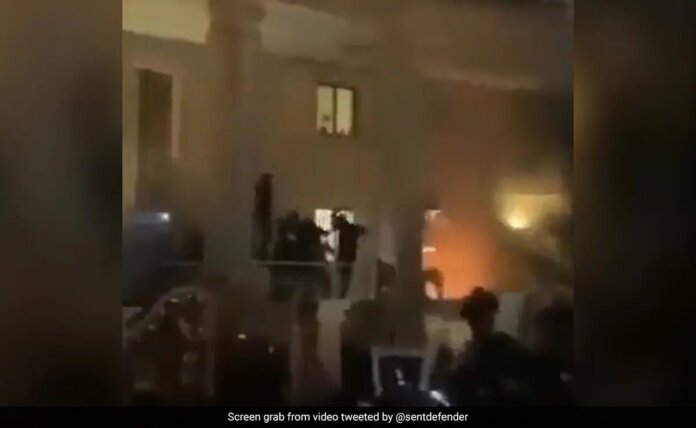
In the early hours of a seemingly peaceful Thursday morning, Baghdad witnessed a chaotic turn of events that shook the diplomatic world. The Swedish Embassy in the city was targeted by hundreds of protesters, leading to a tumultuous situation and fearsome flames engulfing the compound. The turmoil stemmed from a controversial incident in Sweden, where an alleged burning of the Muslim holy book, the Koran, sparked outrage among supporters of Shi’ite cleric Muqtada Sadr and ignited tensions between nations. In this article, we unravel the complexities surrounding the incident and its impact on international relations.
Table of Contents
The Protest and the Unrest: What Happened in Baghdad
Under the banner of support for Shi’ite cleric Muqtada Sadr, protesters gathered outside the Swedish Embassy in Baghdad early Thursday morning. The protesters were incensed by reports of an impending Koran burning event in Sweden, a situation that had previously led to widespread condemnation in Muslim-majority countries. The atmosphere became increasingly tense as the night wore on, eventually culminating in a shocking turn of events – the storming of the embassy complex and setting it ablaze.
According to reports, the Swedish embassy staff remained unharmed during the incident, though the situation remains fluid and subject to further developments. The motives and organization behind the protests are still unfolding, leaving many questioning the impact this event will have on diplomatic relations between Sweden and Iraq.
The Controversy Unveiled: Allegations of Koran Burning
At the heart of the unrest lies the controversy surrounding an alleged Koran burning event in Sweden. Such an act is seen as highly provocative and deeply offensive to many Muslims around the world, given the religious significance of the holy book. Similar incidents in the past have triggered mass protests and condemnation in several Muslim-majority nations.
It’s crucial to note that the authenticity of these allegations has not been independently verified at the time of writing. However, the mere prospect of such an event has proven to be enough to incite fervent demonstrations in Baghdad, echoing the sentiments of many who feel deeply connected to their faith and perceive any desecration of the Koran as a grave offense.
The Role of Social Media: One Baghdad’s Impact
In the digital age, information spreads rapidly, and social media platforms often play a significant role in shaping public perception. One Baghdad, a prominent Telegram channel supporting Muqtada Sadr, was at the forefront of sharing videos capturing the unfolding events outside the Swedish Embassy. The channel’s influence, along with the power of visual evidence, amplified the impact of the protests, spreading awareness and garnering global attention.
Implications on International Relations
As the smoke clears over the Swedish Embassy in Baghdad, it’s essential to assess the broader implications of this tumultuous event on international relations. Diplomatic incidents of this nature can strain relations between countries and require careful navigation to prevent further escalation.
Sweden and Iraq, along with other nations in the region, will need to engage in dialogue to address the underlying tensions and find common ground. Diplomatic communication and cooperation will be vital in de-escalating the situation and restoring stability.
The Importance of Diplomatic Security: Safeguarding Embassies Worldwide
The attack on the Swedish Embassy in Baghdad highlights the critical importance of diplomatic security. Embassies and consulates serve as symbols of a country’s presence on foreign soil, providing a platform for communication, collaboration, and representation. Ensuring the safety of diplomatic personnel and protecting these establishments is paramount to fostering international relations.
Diplomatic security involves a multi-faceted approach, encompassing physical security measures, intelligence gathering, and collaboration with host nations. Each embassy must tailor its security protocols based on the specific threats it faces and the geopolitical context in which it operates.
In light of recent events, nations worldwide may reevaluate their diplomatic security strategies to address potential vulnerabilities and enhance preparedness for unforeseen contingencies. Proactive measures, such as risk assessments, crisis management plans, and training for embassy staff, can help mitigate risks and maintain stability in challenging environments.
Balancing Freedom of Expression and Cultural Sensitivity
The incident in Baghdad also raises pertinent questions about the delicate balance between freedom of expression and cultural sensitivity. While freedom of expression is a fundamental human right, it comes with the responsibility to respect the beliefs and values of others.
Acts that incite religious or cultural offense can have far-reaching consequences, as demonstrated by the protests that erupted in response to the alleged Koran burning. Navigating the fine line between expressing opinions and avoiding harm to others’ deeply held beliefs requires careful consideration and empathy.
Cultivating an environment of open dialogue, mutual understanding, and intercultural respect is essential in fostering harmony and preventing the escalation of tensions. Emphasizing the importance of empathy and cultural awareness in educational institutions and public discourse can promote a more inclusive and tolerant society.
Media Responsibility: Reporting with Sensitivity and Accuracy
In the age of instant information dissemination, media outlets play a crucial role in shaping public perception. Responsible and ethical reporting is essential, particularly when covering sensitive topics like religious beliefs and diplomatic incidents.
Journalists must strive for accuracy, verifying information from reliable sources before reporting events that could have significant ramifications. Sensitivity to cultural nuances and respect for religious sensitivities can help prevent the inadvertent exacerbation of tensions.
At the same time, media outlets should also be vigilant in safeguarding press freedom and avoid self-censorship to ensure the public’s right to access information. Striking a balance between responsible reporting and upholding democratic principles is vital in promoting an informed global community.
A Call for Global Solidarity: Addressing Root Causes
As the world reflects on the events in Baghdad, it is crucial to address the underlying root causes that fuel such incidents. Socioeconomic disparities, political instability, and historical grievances can contribute to feelings of disenfranchisement and frustration among certain communities.
By addressing these issues proactively and promoting inclusive governance, nations can work toward fostering greater social cohesion and minimizing the risk of unrest and violence. Engaging in diplomatic dialogue and addressing grievances through peaceful means is essential in building a more equitable and just world.
Conclusion: The Path Forward Amidst Turmoil
As the world watches the events unfold in Baghdad, it is evident that diplomacy and understanding are crucial in navigating the complex web of international relations. The alleged Koran burning in Sweden has sent ripples through the Muslim-majority nations, rekindling sensitivities and emotions deeply tied to faith.
In the aftermath of the attack on the Swedish Embassy, the global community must come together to promote dialogue, tolerance, and respect for diverse beliefs. Let us remember that unity and compassion are essential in building bridges between nations and fostering a world where conflicts can be resolved through peaceful means.