Deck: Romania’s clash with Austria over Schengen briefly spilled into the Neptun Deep gas project in 2023, but the political context has changed: Romania is now fully inside Schengen, and the Black Sea project is advancing under the existing legal framework. [5]
BUCHAREST — Romania’s dispute with Austria over Schengen membership briefly intersected with the Neptun Deep offshore gas project in 2023, turning a major Black Sea energy development into a wider political issue. But the central fact for readers in 2026 is that the Schengen dispute is no longer active: Romania became a full Schengen member on January 1, 2025, while Neptun Deep remains on track for first gas in 2027. [6]
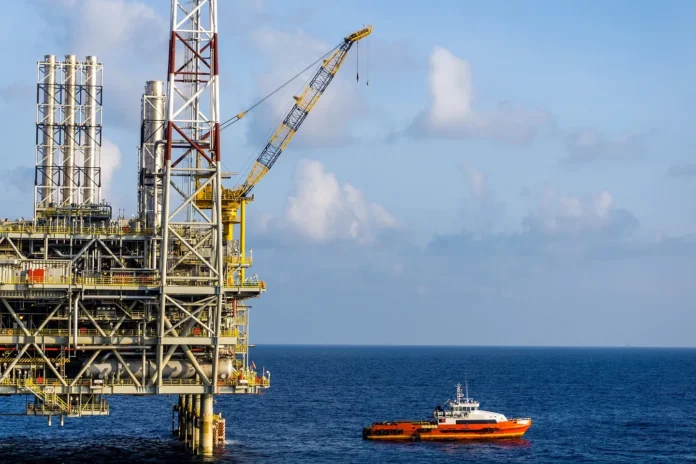
Neptun Deep is one of the European Union’s most significant gas projects. According to official company data, the field is located about 160 kilometers offshore in Romania’s sector of the Black Sea and is being developed by OMV Petrom, the operator, and Romgaz, each with a 50% stake. OMV Petrom says the project involves development spending of up to 4 billion euros and estimated recoverable volumes of around 100 billion cubic meters of gas. [7]
The ownership structure matters because early coverage often simplified the story into a direct Romania-versus-Austria dispute over a field “owned by OMV.” In reality, OMV Aktiengesellschaft holds 51.2% of OMV Petrom, while the Romanian state holds 20.7%, and the field itself is being developed with Romgaz, Romania’s state-owned gas producer, as a 50-50 partner. [8]
The political clash peaked when Austria maintained its opposition to Romania’s Schengen accession on the grounds that Bulgaria and Romania needed to do more to curb irregular migration. Border checks for air and sea travel were lifted on March 31, 2024, but land-border controls remained until Austria dropped its veto in December 2024. The Council of the EU then approved the removal of internal land-border checks from January 1, 2025. [9]
At the height of that dispute, the <a href=”https://www.ft.com/content/c485abce-48ea-4b29-8c47-ba53b1a21c95″>Financial Times</a>, in an article summarized by <a href=”https://adevarul.ro/economie/ft-neptun-deep-folosit-de-romania-impotriva-2306148.html”>Adevărul</a>, reported that Romanian Prime Minister Marcel Ciolacu said his government would continue with the existing offshore-law framework while Austria kept blocking Romania’s Schengen bid. Adevărul also reported that Energy Minister Sebastian Burduja described the law as allowing state intervention only in certain emergency situations, while OMV said it hoped Romania would soon be admitted to Schengen. [10]
The law at the center of that argument was Romania’s amended offshore framework from 2022. According to OMV Petrom’s prospectus, the state can impose temporary restrictions on price and sale under certain conditions, and gas sold through bilateral contracts must be offered first to the Romanian state, which has seven days to accept or refuse. PwC Romania’s summary of Law No. 157/2022 describes the same priority-sale mechanism. That makes the dispute more specific than the original draft suggested: the issue was the degree of state control over commercialization, not a blanket ban on offshore sales. [3]
Despite that political and legal friction, the project did not stop. OMV Petrom and Romgaz took the final investment decision in June 2023, the development plan was confirmed in August 2023, and drilling of the first production well began in March 2025. OMV said in March 2025 that Neptun Deep should contribute about 8 billion cubic meters annually to Romania’s gas production once plateau output is reached, with drilling of the ten planned wells expected to continue into the fourth quarter of 2026. [11]
That output is strategically important for more than Romania. Reuters reported in March 2025 that Neptun Deep could double Romania’s gas production and likely turn the country into a net exporter, even as Romania’s own gas demand rises because of new gas-fired power generation. Reuters also reported that future gas from Neptun Deep has already been contracted in part to Moldova’s Energocom, while Germany’s Uniper and, more recently, Slovakia have also shown interest in supplies linked to the project. [12]
The most accurate conclusion now is that Neptun Deep was briefly entangled in a Romania-Austria political conflict, but it is no longer a Schengen hostage. Romania is already inside the Schengen area, the project is advancing under the current legal regime, and first gas is still officially targeted for 2027. [13]
[1] Schengen area: Controls at air and sea borders with Bulgaria and Romania will be lifted – Migration and Home Affairs
[2] [8] OMV Petrom Shareholder Info – Structure, Shares & History | OMVPetrom.com
[3] omvpetrom.com
[4] [10] FT: Neptun Deep, folosit de România împotriva Austriei în cazul Schengen | adevarul.ro
[5] [13] Romania and Bulgaria become full members of EU’s Schengen zone | Reuters
[6] Austria drops veto on Bulgaria, Romania fully joining Schengen travel zone | Reuters
[7] [14] Neptun Deep – A stronger Romania. With energy from the Black Sea | OMVPetrom.com
[9] Passport checks for air travellers lifted as Bulgaria and Romania join EU’s Schengen | Reuters
[11] OMV Petrom and Romgaz announce the decision to develop Neptun Deep, the largest natural gas project in the Romanian Black Sea | OMVPetrom.com
[12] Drilling starts on Romanian Black Sea offshore gas project that challenges Russia | Reuters