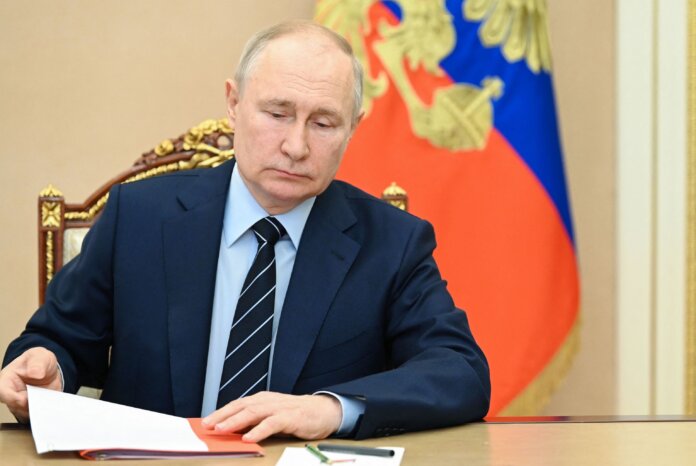
Imagine the startling scenario of Russian President Vladimir Putin being arrested on foreign soil. A dramatic declaration of war against Moscow, warned South Africa‘s President Cyril Ramaphosa, could ensue if such a scenario unfolds during the upcoming BRICS summit in Johannesburg. As the tension escalates, questions abound about the implications this situation holds for international relations and South Africa‘s national security. In this article, we embark on a riveting exploration of the possibility of Vladimir Putin‘s arrest during his visit to South Africa and the high-stakes diplomatic dance surrounding it.
Table of Contents
The ICC Arrest Warrant Conundrum
As Vladimir Putin departs Russian territory for the BRICS summit in South Africa, he faces the looming specter of an International Criminal Court (ICC) arrest warrant. While South Africa is a signatory to the ICC, it has previously shied away from fulfilling such obligations. In 2015, the country granted safe passage to Sudan’s then-President Omar al-Bashir, who was wanted for war crimes. Now, the tables have turned, and the spotlight is on South Africa’s response to the potential arrest of the Russian president.
Democratic Alliance’s Legal Battle
The Democratic Alliance, South Africa’s largest opposition party, has taken the matter to court, seeking to compel authorities to arrest Vladimir Putin. Their argument hinges on the gravity of the allegations against the Russian leader and the moral responsibility of the ICC signatories to uphold justice. However, President Cyril Ramaphosa asserts that the situation is far from straightforward.
Balancing National Security and Diplomacy
President Ramaphosa contends that arresting Vladimir Putin could have dire consequences for South Africa’s national security. The implications of such an action, he argues in an affidavit, are equivalent to a declaration of war by Russia. In the delicate realm of international diplomacy, South Africa finds itself at a crossroads, trying to navigate a path that safeguards its sovereignty while avoiding potential conflict with a powerful nation like Russia.
The African Involvement in Ukraine Conflict
Adding to the complexity of the situation, South Africa is among several African nations engaged in discussions with both Russia and Ukraine to find a resolution to the ongoing conflict. President Ramaphosa emphasizes the importance of dialogue and negotiation in ending Russia’s invasion of Ukraine. Arresting Vladimir Putin during the BRICS summit might derail these delicate diplomatic efforts and undermine the prospect of peaceful resolution.
The Human Side of International Politics
Amidst the web of political intricacies, it is crucial to remember that international politics are shaped by human interactions. Leaders of different nations engage in dialogue, seeking common ground while acknowledging their respective responsibilities. During a recent meeting with Ukrainian President Volodymyr Zelensky and Vladimir Putin in St. Petersburg, President Ramaphosa played a significant role in facilitating dialogue and fostering understanding.
The Unpredictable Road Ahead
As the days count down to the BRICS summit in South Africa, the world holds its breath, uncertain of what the future holds. The possibility of Vladimir Putin’s arrest on foreign soil is unprecedented and teeming with ramifications for global politics. The decisions made in the days to come will undoubtedly influence the dynamics of international relations and may redefine the boundaries of diplomacy.
The Global Spotlight: A Tense Stage for South Africa
With the news of the potential arrest of Vladimir Putin spreading like wildfire, South Africa finds itself under the global spotlight. As one of the host countries for the BRICS summit, the nation is tasked with striking a delicate balance between its international obligations and national security interests.
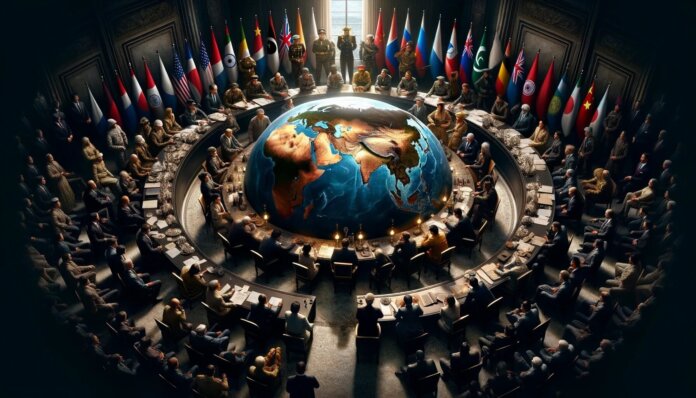
The BRICS summit represents a critical platform for cooperation and collaboration between Brazil, Russia, India, China, and South Africa – five major emerging economies. The annual meeting facilitates discussions on pressing global issues, economic development, and strategies for addressing challenges faced by member nations. However, this year’s summit takes on a unique significance with the presence of Vladimir Putin, coupled with the shadow of a possible ICC arrest warrant.
In response to the Democratic Alliance’s legal action seeking Vladimir Putin’s arrest, South Africa’s judiciary faces an arduous decision. The court’s ruling will have significant implications not only for the BRICS summit but also for the nation’s future diplomatic engagements.
Diplomacy in the Crossfire
As the legal battle unfolds, diplomats and foreign policy experts are closely monitoring the developments. The delicate situation puts South Africa in a tight spot, forcing it to consider the implications of its actions on its international relationships and standing.
For President Cyril Ramaphosa, the upcoming summit poses a daunting challenge – balancing the pursuit of justice and adherence to international treaties while preserving South Africa’s diplomatic ties with Russia. The country’s decisions in the coming weeks may have far-reaching consequences for its relationships with other BRICS nations and the global community.
Exploring Diplomatic Solutions
To mitigate the potential fallout of Vladimir Putin’s arrest, South African diplomats are engaging in behind-the-scenes discussions. Seeking diplomatic solutions to avert a crisis, they aim to find common ground that protects both national interests and international commitments.
The African Union, too, has been actively involved in the ongoing negotiations. Recognizing the importance of regional stability and unity, the African nations involved in discussions with Russia and Ukraine are collectively strategizing ways to support peace and resolution.
Implications on International Relations
The scenario of a sitting president being arrested on foreign soil is unprecedented in modern international relations. Should Vladimir Putin face arrest, the repercussions would extend far beyond the borders of South Africa. The incident could create a domino effect, leading to diplomatic strains and potentially impacting other international events and summits.
The outcome will undoubtedly shape the narrative around international justice and accountability. The precedent set by South Africa’s decision will echo throughout the global political landscape, influencing how other nations approach similar situations in the future.
The Human Element in Diplomacy
Amidst the high-stakes diplomacy, it is essential not to lose sight of the human element involved. Leaders like President Cyril Ramaphosa shoulder immense responsibility in navigating these uncharted waters. Their decisions can impact the lives of millions of people and shape the course of history.
The complexities of international relations often demand tough choices, but leaders must remain steadfast in their commitment to promoting peace, justice, and cooperation. Through genuine dialogue and empathy, diplomats can bridge divides and foster understanding between nations.
Conclusion
In the realm of international politics, the unexpected can unravel before our eyes. The hypothetical scenario of Vladimir Putin’s arrest in South Africa brings to the fore the complexity of diplomacy and the delicate balance required to navigate such situations. As the BRICS summit approaches, the world watches with bated breath, mindful of the potential consequences and implications that this unique situation may yield.
While politics and diplomacy may seem distant and impersonal, they are, in reality, a reflection of human interactions, aspirations, and responsibilities. It is through collective efforts and dialogue that nations can strive for peace, cooperation, and understanding.
As we ponder the fascinating dilemma of Vladimir Putin’s visit to South Africa, let us remember that in the tapestry of international relations, each thread of diplomacy weaves a story of its own.